

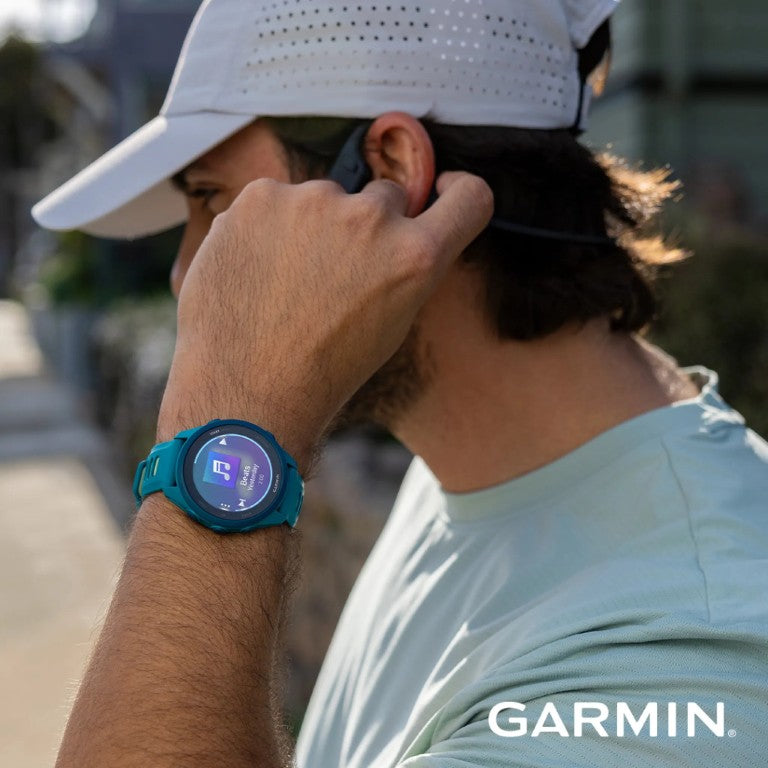
Garmin sells more than 40 watches at any given moment, and the naming is a mess. Forerunner 70, 170, 265, 570, 970. Instinct, Instinct E, Instinct 3 Solar, Instinct 3 AMOLED. Venu, vívoactive, fenix, fenix E, fenix 8 Pro. Two watches can sit $600 apart and track your 5K almost identically.
So instead of ranking watches by score, this guide sorts them by what you are actually willing to spend in Canadian dollars, and tells you what each price jump buys you. Prices below reflect typical Canadian retail in 2026 and move around during sale events.
Under $400: your first real GPS watch
The Forerunner 70 replaced the long-running Forerunner 55 and sits around $350. It is the cheapest way into Garmin's current software. You get a 1.2-inch AMOLED screen, roughly 13 days of battery in watch mode and about 23 hours with GPS running, plus Garmin Coach plans that adjust based on how your last few runs went. Skip it only if you want music on your wrist or contactless payment, since those are cut from this tier.
The Instinct E lands near the same price and takes the opposite approach: monochrome display, chunky polymer case, weeks between charges. If your use case is winter hiking, ice fishing or working outdoors in Sudbury in February, the readable-in-any-light screen and cold tolerance beat a bright AMOLED.
Also worth checking here: last-generation models. The vívoactive 5 and Instinct 2 Solar regularly drop into the $300s once a newer version ships, and the feature gap is smaller than the price gap suggests. It is worth scanning current Garmin watch deals before paying full price for an entry-level model, because Garmin discounts older stock aggressively rather than quietly discontinuing it.
$400 to $700: the range most Canadians should shop
This is where the value sits.
The Forerunner 170 (about $420, or $490 with onboard music) adds Garmin Pay, full smart notifications and the option to leave your phone at home on a run. For most recreational runners, this is the last watch they will need.
The vívoactive 6 runs around $440 and is the pick if you are not a dedicated runner. It handles roughly 11 days per charge, covers 80-plus activity profiles, and does sleep and stress tracking well without burying you in training jargon. Compared to an Apple Watch, you trade app depth for not charging every single night.
The Instinct 3 starts near $490 for the 45mm Solar version and around $580 for the AMOLED. The built-in flashlight sounds like a gimmick until you use it during a 5pm dog walk in December. Solar charging is genuinely useful for summer canoe trips and close to irrelevant from November to March under a jacket sleeve, so pick the version that matches when you are outside.
The Forerunner 265 hovers around $660 and remains one of the better buys in the lineup. It is a generation behind the 570 but keeps the dual-frequency GPS and full training suite.
One feature worth paying attention to in this bracket: multi-band (dual-frequency) GPS. If you run through downtown Toronto, Montreal or Vancouver, or on tree-covered trails, single-band GPS will chop corners off your route and mess up your pace. Multi-band is the single upgrade most people actually notice day to day.
$700 to $1,100: training data you will actually use
The Forerunner 570 sits near $800 in 42mm or 47mm. Brighter screen, speaker and mic for calls, and the full suite of recovery metrics including training readiness and HRV status. Triathletes get proper multisport transitions here.
The Venu 4 starts around $770 and is Garmin's lifestyle flagship, leaning into sleep coaching, wellness reports and a more polished look for the office.
The Forerunner 970 at roughly $1,100 is the serious endurance pick: titanium bezel, sapphire lens, ECG, running economy metrics and a flashlight. Before you buy it, be honest about whether you will act on the data. Running tolerance and step-speed loss are excellent if you are training for a marathon in Ottawa or a 50K in the Rockies. They are wallpaper if you jog twice a week.
Over $1,100: fenix territory
The fenix E at about $1,160 is the softest entry into the flagship line and a smart buy if you want fenix build quality without every mapping feature.
The fenix 8 runs roughly $1,450 for the 43mm AMOLED and climbs past $1,700 for the 51mm Sapphire. You get full topographic maps stored on the watch, a metal case, dive-rated water resistance and multi-week battery on the larger sizes.
The fenix 8 Pro sits near $1,680 and adds satellite messaging on certain models. Read the fine print: those features need an active subscription, so factor in the monthly cost, not just the sticker. For backcountry travel in Canada, that capability can matter more than any training metric on the watch.
If your priority is navigation rather than fitness, compare these against dedicated GPS navigation units and handhelds. A handheld with a big screen and AA batteries is often the better tool for hunting, marine use or a week-long portage, and it costs less than a flagship watch.
Size, screen and cold weather
Three practical notes that spec sheets skip.
Case size matters more than model. A 47mm fenix on a 150mm wrist looks and feels wrong no matter how good the software is. Check the case diameter before the feature list.
AMOLED screens are gorgeous and drain faster, especially with gesture wake-on-wrist and always-on display enabled. Battery claims assume neither is cranked up.
Cold cuts battery life. Expect noticeably shorter runtime at minus 20 than the box promises, and keep the watch under your sleeve during long winter efforts.
When to buy
Garmin runs its deepest discounts in mid-November through Black Friday, with a smaller spring sale in May. Outside those windows, previous-generation models are where the savings hide. A Forerunner 265 at $500 beats a Forerunner 570 at full price for most buyers.
You can browse the full Garmin watch selection available in Canada to compare sizes, battery ratings and current pricing side by side.
The short version
Buying your first running watch: Forerunner 70. Wanting an everyday smartwatch: vívoactive 6. Spending most weekends outside: Instinct 3. Training for a specific race: Forerunner 570 or 970. Heading somewhere without cell coverage: fenix 8 or fenix 8 Pro.
Buy for the training you do now, not the version of yourself you plan to become in March.
Partager:
Milwaukee M18 vs M12: Which Battery Platform Should You Buy?
Garmin Fenix vs Epix vs Instinct: Which Is Right for You?