

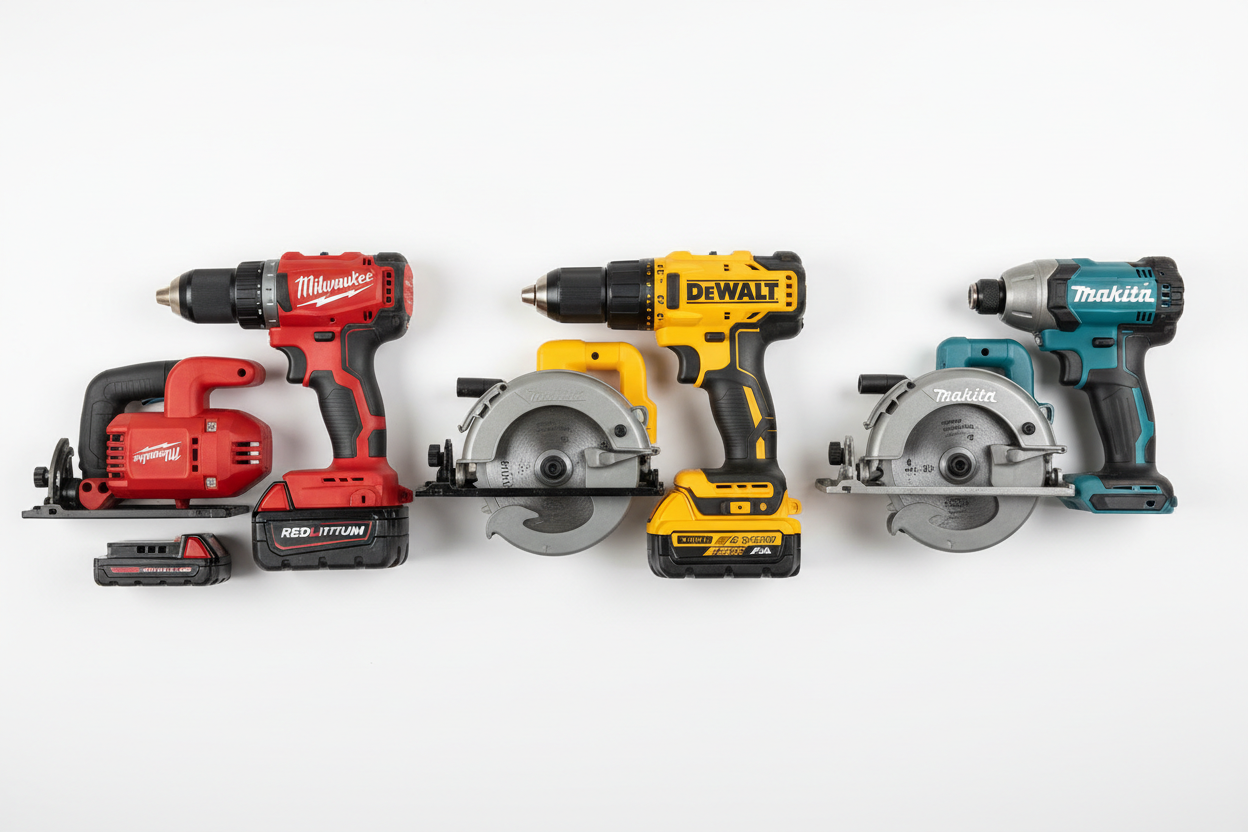
Pick any of these three and you will own a great cordless tool. The harder question, and the one that actually costs you money down the road, is which brand deserves your first battery purchase. Here is how Milwaukee, DeWalt, and Makita stack up for Canadian buyers in 2026.
The short answer
If you want the quick version, all three build excellent cordless tools, and none of them will embarrass you on a job site or in a home garage. The real decision comes down to which battery system you want to commit to, because once you buy into a platform, switching later gets expensive fast.
Milwaukee tends to win for tradespeople who lean on their tools every single day. DeWalt is the safe, widely stocked pick that fits almost any budget. Makita quietly does everything well and usually runs cooler and lighter than the other two. That is the summary. The rest of this post explains the reasoning.
Battery platforms matter more than the drill
Most buyers miss this part. You are not really choosing a drill. You are choosing a battery ecosystem you will feed for the next decade.
Milwaukee runs M18 and M12. DeWalt runs 20V MAX, with FlexVolt packs that step up to 60V for the hungrier tools. Makita splits into 18V LXT and the newer 40V XGT line. Every bare tool you add later has to match the batteries already sitting on your shelf, so that first purchase quietly locks in every purchase after it.
The practical rule is simple. Pick the brand that makes the specific tools you use most, then stay in that lane.
Milwaukee: built for the trades

Milwaukee has spent years chasing professional electricians, plumbers, and mechanics, and it shows in the catalogue. The M18 Fuel line is packed with brushless motors, and the Packout storage system has a genuine cult following for good reason.
Where Milwaukee pulls ahead is the depth of specialty gear. Cordless bandsaws, pipe threaders, transfer pumps, heated jackets that keep you working through a Prairie cold snap. If your trade is niche, Milwaukee has probably already built the tool for it. A lot of Canadian pros gravitate here, and the pricing reflects that professional positioning.
You can browse the full Milwaukee cordless tool lineup to see how deep the M18 catalogue really goes.
DeWalt: the reliable all-rounder

DeWalt is the yellow you spot on every second work truck, and that is not an accident. The 20V MAX platform is enormous, the tools are dependable, and you can find batteries and replacements almost anywhere in the country. That availability is worth more than people admit when you are stuck mid-project and need a spare pack before the weekend.
FlexVolt is the clever bit. One battery physically switches voltage depending on the tool it goes into, so a single pack can run a compact drill and a heavy miter saw. For a mixed workshop that juggles small and large tools, that saves real money.
DeWalt also sits in a comfortable spot on price. It usually costs less than Milwaukee while giving up very little in day-to-day performance. Take a look at the DeWalt power tools we carry if you want a platform that grows with you without punishing your wallet.
Makita: smooth, quiet, and underrated

Makita rarely shouts, which is likely why it gets skipped in these arguments. Spend a day with the tools and the appeal clicks. They tend to run smoother, weigh a touch less, and the ergonomics feel dialed in after long hours of use.
The 18V LXT range is huge and mature, with hundreds of tools sharing one battery. The 40V XGT line brings serious muscle for demanding cutting and drilling without stepping outside the brand. Makita's brushless motors and cooling hold up well under heat, and the chargers move fast.
The catch is the two-platform split. LXT and XGT batteries do not cross over, so you have to pick a side before you start investing.
What about Canadian winters?
Cold is a fair thing to worry about here. Lithium batteries lose runtime in freezing temperatures across every brand, so nobody gets a free pass. All three companies have improved cold-weather behaviour, but the fix on the ground is the same no matter the logo. Keep a spare battery warm in your jacket or truck cab and rotate it in as the cold one fades. Milwaukee's heated gear is a nice bonus if you spend February working outdoors.
Price and value in 2026
On price, DeWalt is usually the friendliest, Makita lands in the middle, and Milwaukee sits at the premium end. Kit deals shuffle that math constantly, though. A combo kit with two batteries, a charger, and a couple of tools almost always works out cheaper per tool than buying bare units one at a time.
If you are just getting started, buy a combo kit in whichever brand you have chosen. It is the cheapest way onto a platform, and the included batteries alone tend to justify the price.
So which brand should you buy?
Buy Milwaukee if you work in the trades, want the widest range of specialty cordless tools, and do not mind paying more for that depth.
Buy DeWalt if you want dependable performance, easy availability across Canada, and the FlexVolt trick for running big and small tools off one battery.
Buy Makita if you value comfort, lighter weight, quieter operation, and a mature 18V range, and you are fine choosing between LXT and XGT from the start.
You will end up happy with any of them. The wrong move is not picking the "wrong" brand. It is scattering your money across all three platforms and ending up with batteries that never talk to each other. Pick one, commit, and build your kit from there.
Ready to compare models side by side? Start with our full cordless power tools collection and filter by the brand and battery system that fits the work you actually do.
Share:
Milwaukee M18 vs M12: Which Battery Platform Should You Buy?